Sat 3 Jul 2010
So I open this nifty bottle of $20 cabernet from, say, Napa Valley and, let’s see, the alcohol is 14.5 to 15 percent, it has
dollops of merlot and cabernet franc and a touch of syrah — people are so clever nowadays! — it smells like vanilla-laced, toasty oak and cassis and, you know, it’s fine, just fine, but nothing very special or exciting. But, hey, we’re just talking about 20 bucks, so do we care?
Then I open this bottle of cabernet that costs $45 or $60 or $75 from, oh, just about anywhere but let’s say Tuscany, and the alcohol is 14.5 to 15 percent, it has dollops of merlot and cabernet franc and a touch of syrah — people are so clever nowadays! — it smells like vanilla-laced, toasty oak and cassis and, you know, it’s fine, just fine, but nothing very special or exciting. And, come on, we’re talking real money here, wine-wise.
I’m so tired of this crapola. I just want to pour out these damned wines. I’m tired of interchangeable cabernet-based wines that could have been made in Napa or Sonoma, Tuscany or Piedmont, Barossa or Coonawarra, Rapel or Mendoza or Walla Walla because they all look and smell and taste and feel the same. Lord, I’m so weary of carefully-calibrated, committee-made cabernets that toe the line of all the popular, 95-point conventions and cliches. Have mercy, I’m exhausted by the sleek, slick debut cabernets that cost $75 or $100 a bottle right out of the starting gate, with no track record except the promise of a winemaker’s name. Criminy, I’m sick unto death of the press releases that inform me in exalted, ecstatic tones of the owner’s vision and the winemaker’s passion and the integrity of the land and the absolute sustainable architectural treasureness of the winery.
And speaking of the integrity of the land, the notion of terroir and single-vineyard wines don’t matter a rat’s ass when the finished wine is sodden with oak and hot with alcohol. Don’t spin me the hype of how important yer little microclimate and soil and organic philosophy and vineyard practices are (not to mention all that vision and passion) when you clobber the wine with wood and eradicate any terroir-like character it might have had. What a waste!
So stop it. Right now.
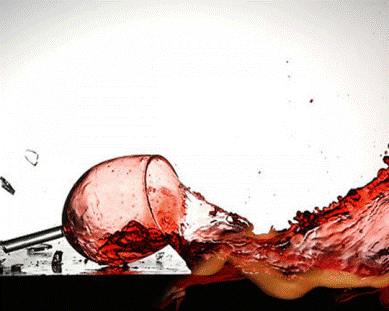
Broken wine glass image from apartmenttherapy.com.
July 3rd, 2010 at 3:42 pm
Perfectly understandable POV, Fredric. You love wine, love its (potential) diversity, love how it can reflect place. For many wineries, however, the idea of making something unique is scary, because — they assume — most consumers don’t want to be surprised. So the wineries play it safe and turn out very well made varietal facsimiles. Then they attempt to differentiate it from their competitors with the marketing/PR, ironically (moronically) by saying the same old sh– everyone else is saying. Yep. Pretty sad state of affairs.
July 3rd, 2010 at 4:17 pm
thanks, Pete, you have summed up the situation exactly. and of course in other countries, they see what (they think) American consumers want and make their wines accordingly.
July 3rd, 2010 at 6:36 pm
We must be on the same samples list, ‘cepting I don’t get the expensive stuff
July 3rd, 2010 at 7:23 pm
It’s time you spent a few days in and around Walla Walla tasting cabs.
July 4th, 2010 at 11:17 am
AMEN!!!!
July 4th, 2010 at 1:06 pm
ok, ok, Walla Walla fans, i get the idea, i get the idea!
July 5th, 2010 at 2:54 am
Great post, and true every word. For me the key element is acidity… So many of these wines are jammy and thick and syrupy. Give me a little zing on my red wines, not the fruit bomb blackberry syrup that makes an impact during 100-bottle blind-tastings!